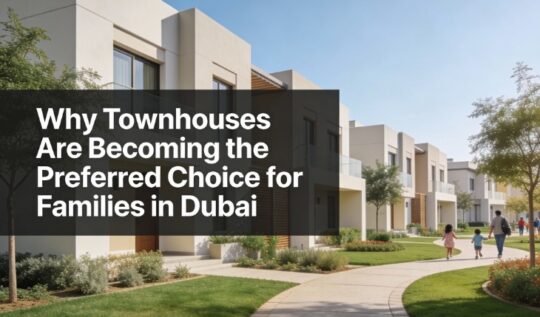
Have you ever thought about whether investing in residential or commercial property in Dubai, UAE offers better returns? Dubai attracts investors from around the world as a global business and lifestyle hub. The city’s active real estate market provides solid opportunities in both residential and commercial sectors, but understanding the differences between them is essential for making a smart investment.
Overview of Residential Real Estate in the UAE
The residential property market in the UAE mainly serves individuals and families looking for long-term living options or rental income. Residential investments can range from small apartments for young professionals to luxury villas in upscale neighbourhoods like Emirates Hills or Palm Jumeirah.
Key Points to Note:
- Residential properties benefit from the increasing expatriate population, urbanization, and lifestyle-focused communities.
- Rental yields for residential properties in Dubai usually range from 5 to 7%, depending on location and property type.
- Off-plan projects offer investors flexible payment plans and the chance for capital growth before project completion.
Highlights:
- 5 to 7%: Average residential rental yields in Dubai
- 10+ years: Long-term capital growth trend for prime areas
- 300+: Residential communities in Dubai serving various demographics
Residential properties usually involve less management complexity. Investors can enjoy a mix of steady rental income and gradual capital growth, particularly in freehold areas open to foreign buyers.
Overview of Commercial Real Estate in the UAE
Commercial properties in Dubai serve businesses, retail outlets, and industrial activities. Popular investment choices include office spaces, retail units, warehouses, and coworking spaces. Dubai’s role as a regional business hub creates high demand for commercial spaces.
Key Points to Note:
- Commercial properties often provide higher rental returns than residential, with yields between 7 and 10%, especially in high-demand areas like Business Bay, Downtown Dubai, and Dubai Media City.
- Tenant contracts are usually long-term (3 to 5 years), offering predictable income but requiring professional management to ensure compliance and quality service.
- Entry costs for commercial properties are generally higher, often needing significant upfront capital or larger financing arrangements.
Highlights:
- 7 to 10%: Average commercial rental yields
- 3 to 5 years: Typical commercial lease duration
- 15 to 20%: Higher return potential compared to residential
Residential vs Commercial: Key Differences
To make decision-making easier, here’s a detailed comparison of residential and commercial properties in Dubai:
| Aspect | Residential Property | Commercial Property |
| Purpose | Living, renting, lifestyle investment | Business operations, leasing to companies |
| Property Types | Villas, townhouses, apartments, penthouses | Offices, retail units, warehouses, coworking spaces |
| Rental Yield | Moderate: 5–7% | High: 7–10% |
| Tenant Stability | Moderate; families and expats may relocate | High; businesses commit to long-term leases |
| Management Intensity | Low: basic maintenance and tenant management | High: contracts, compliance, lease renewals, facility management |
| Capital Appreciation | Steady, long-term growth | Potentially faster, market-sensitive |
| Financing | Easier mortgage access, lower entry cost | Higher down payments, complex financing requirements |
| Market Sensitivity | Less affected by economic cycles | More sensitive to economic shifts and business cycles |
| Location Impact | Luxury areas drive demand | Business districts and retail hubs are critical |
| Legal Considerations | Freehold areas accessible to foreigners | Additional regulations for commercial leasing and usage |
Residential Investment Process:
Identify Community → Select Property Type → Evaluate Rental Yield → Purchase/Off-Plan Investment → Manage Tenants & Maintenance → Monitor ROI & Market Trends
Commercial Investment Process:
Market Analysis → Identify Business Demand → Select Property Type → Evaluate Lease Potential → Secure Financing → Lease to Business → Professional Property Management → Monitor ROI & Renew Contracts
Investment Considerations
When choosing between residential and commercial investments, consider the following:
- Budget and Financing:Residential properties need less initial capital and easier mortgage approval, while commercial properties typically require more upfront cash and stronger financial documentation.
- Risk Appetite:Commercial properties can be more affected by economic changes but may offer higher returns. Residential properties provide steadiness and slow capital growth.
- Tenant Types:Residential tenants are usually individuals or families, while commercial tenants are businesses with long-term lease agreements.
- Management Needs:Residential properties can often be managed by owners, while commercial properties usually need professional management because of their complexity.
- Location Importance:Prime residential areas like Dubai Marina, Downtown Dubai, and Palm Jumeirah increase rental and resale value. Commercial properties in Business Bay or Dubai Media City can attract more business leasing.
Highlights:
- AED 1M+:Minimum investment in Dubai residential properties
- AED 3M+:Typical starting point for prime commercial investments
- 6 to 10%:Average return range for Dubai real estate investors
Market Trends and Opportunities
Dubai’s real estate market shows steady growth and changing investment chances:
- Residential Sector:There’s a rising demand for affordable apartments, family-oriented villas, and off-plan developments. The increasing expatriate community continues to drive rental demand.
- Commercial Sector:Office spaces and retail units in busy areas are still in high demand. Industrial properties and warehouses are gaining interest because of the growth of e-commerce.
- Emerging Mixed-Use Opportunities:Developments like Dubai Creek Harbour and Dubai South blend residential, retail, and office spaces, offering varied investment options.
Conclusion
Deciding between residential and commercial properties in Dubai requires careful consideration of financial goals, risk tolerance, and management capabilities. Residential properties can offer stable returns and long-term growth, while commercial investments may yield higher returns but need professional management. With careful planning and expert advice from Unihomes, investors can maximize returns while minimizing risks in Dubai’s dynamic real estate market.
Frequently Ask Questions
Q1: Can foreigners buy residential and commercial properties in Dubai?
Yes. Foreigners can purchase both in designated freehold areas. Unihomes offers complete support for legal processes and registration.
Q2: Which type of property has higher rental yields?
Commercial properties typically yield between 7 and 10%, while residential properties usually offer 5 to 7%.
Q3: Can non-residents get financing for Dubai properties?
Yes. Mortgages are available for non-residents, although commercial financing often requires larger down payments.
Q4: Are off-plan residential properties good investments?
Off-plan properties provide flexible payment options and potential capital growth, making them appealing to long-term investors.
Q5: Should I hire a property management service?
Hiring professional management is recommended for commercial properties. Residential properties can often be managed independently but can benefit from optional management services for easier operations.